
Understanding Volatility and Opportunity in Indian Equity Benchmarks
Explore volatility’s role in Indian equity benchmarks and investment strategies.
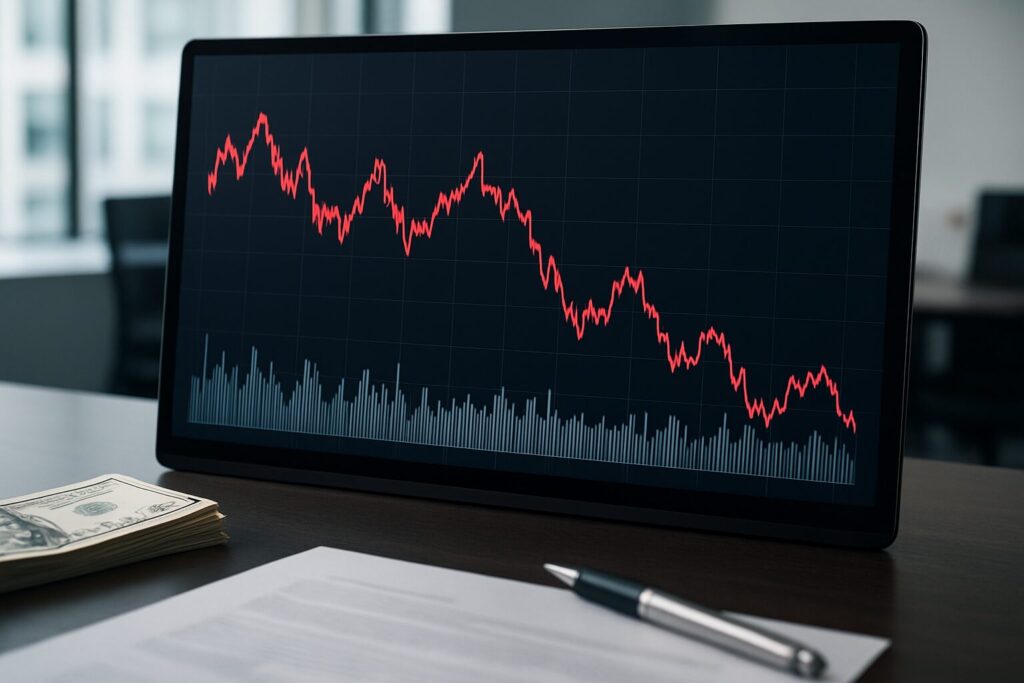
There is perhaps no better teacher of investor psychology than the experience of watching a major market correction unfold in real time. When India’s flagship indices drop sharply over a period of days or weeks, the emotions they trigger — anxiety, urgency, the impulse to act — are among the most powerful forces that shape investment outcomes. The INDEXBOM: SENSEX has, across its long history, tested investor conviction through multiple severe downturns, and the Nifty 50 has done the same, each time ultimately recovering to scale new highs and reward those who remained steadfast.
Volatility as a Feature, Not a Flaw
Many investors, and particularly new investors, regard volatility as an enemy to be avoided. The truth is that volatility is the price to be paid for the rich rewards that equities have traditionally delivered over bonds, fixed deposits and gold. The volatility inherent in the equity markets is what makes up for the risk premium for taking up equity as an asset class. Institutional research proves that investors who get out of the equity markets during periods of high volatility and wait for the market to stabilise and then get back in, tend to miss out on the best rallies of all – the ones that occur in a few concentrated trading sessions. The returns from being out of the market for those few crucial sessions are significantly impacted on the overall returns of the investor over the complete cycle.
How Circuit Breakers and Regulatory Safeguards Help
The exchanges and the regulators have put in place certain mechanisms to deal with extreme volatility and keep the markets orderly. The circuit breakers that halt trading for a while if the index moves down by ten, fifteen or twenty per cent aim to give the market participants a cooling-off period wherein they can take rational decisions rather than being caught up in a stampede.
Circuit breakers at the level of individual stocks prevent steep intraday movements. The new listings and stocks under regulatory scrutiny have bands that prevent steep moves. All these contribute to an orderly market while ensuring that the price discovery mechanism works.
SEBI has also put in place various mechanisms to ensure transparency in dealings, faster settlements, and prevent price distortions. The shorter settlement cycles, mandatory disclosures and vigilance over unusual price movements contribute to a healthy exchange environment that benefits all market participants.
Sectoral Rotations in a Volatile Market
Even while the overall index is down, investors should keep in mind that money within the equity markets tends to rotate from one sector to another. Defensive sectors tend to garner more fund inflows while the cyclical ones tend to lose out in a down market. Similarly, once the rally begins, the defensive ones tend to lose money while the cyclical ones tend to gain. Understanding where the money is going and coming from helps the investor spot opportunities that exist even in an overall down market. A disciplined approach helps the investor to spot a great stock in a down sector that is getting dumped merely because of sector rotations rather than specific stock-specific reasons and take advantage of such opportunities while they exist.
The Mental Framework for Equity Market Cycles
The mental framework to deal with equity market cycles has to start with building up an investment philosophy before the volatility hits. An investor who has a clear understanding as to why she has invested in the first place and what she expects from equities in terms of her time horizon, and how much she can stomach in terms of losses in the short term, is better placed to handle the volatility when it hits. She must lay down the investment thesis for each stock that she buys – detailing out what the company does, what gives her confidence in the stock and what will convince her to sell it in case her thesis is proved wrong. This will help her to not get fazed out by strong emotions when the stock price moves down by twenty per cent or more on the markets’ volatility.
India’s equity markets, reflected in the headline indices, have given fabulous returns to long-term investors. Investors who have stood the test of time and the market volatility over the last couple of decades to truly reap the equity risk premium have truly reaped the benefits. The ones that have made the most out of these markets have done so by building up their conviction through their studies and knowledge, and a strong focus on the fundamentals of whatever it is that they have invested in.
Quick Summary
- Investor psychology is heavily influenced by market corrections, igniting emotions such as anxiety and urgency that impact decision-making.
- Volatility in equity markets is essential for higher returns compared to bonds, fixed deposits, and gold, as it compensates for the risks involved.
- Investors who exit the equity markets during high volatility often miss significant rallies that can occur within just a few trading sessions.
- Market mechanisms like circuit breakers and regulatory safeguards are designed to manage extreme volatility and maintain orderly trading environments.
- In declining markets, capital tends to shift from cyclical to defensive sectors, and understanding this rotation can help investors identify opportunities.
- A clear investment philosophy that considers time horizon and risk tolerance helps investors manage emotions and make informed decisions during market volatility.