Business analytics and its power to analyse customer sentiment
Introduction
Business analytics is a field that utilises various techniques, tools, and methodologies to analyse data and extract actionable insights to support decision-making within organisations. Customer sentiment analysis is one of the powerful applications of business analytics, particularly in understanding and responding to customer needs, preferences, and opinions. For most business strategists and decision makers, acquiring skills in sentiment analysis by attending a BA Analyst Course or a similar learning program is not only a career booster but also a professional necessity.
Business analytics to analyse customer sentiment
Here is how business analytics empowers the analysis of customer sentiment:
- Data Collection: Business analytics involves collecting vast amounts of data from various sources such as social media, customer reviews, surveys, and customer service interactions. These data sources provide valuable insights into customer sentiment across different touchpoints.
- Text Mining and Natural Language Processing (NLP): With the help of text mining and NLP techniques, business analytics can analyse unstructured data, such as customer reviews and social media posts, to identify patterns, sentiments, and themes. NLP algorithms can understand the context, tone, and emotions expressed in customer feedback. Sentiment analysis can never be effective unless NLP techniques are employed to correctly infer the purport of customer feedback. Almost any Business Analysis Course tailored for business strategists will cover NLP as it is a necessary technique that complements sentiment analysis.
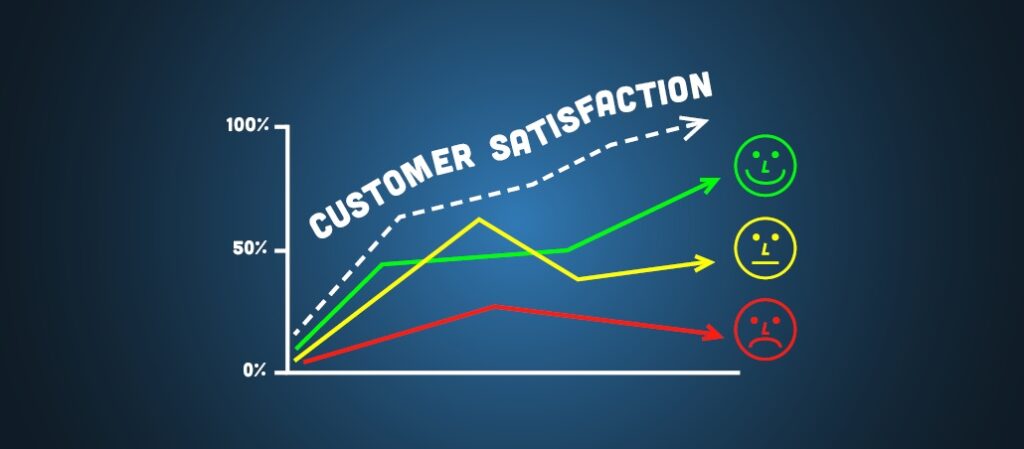
- Sentiment Analysis: Sentiment analysis algorithms classify text as positive, negative, or neutral based on the language used. Business analytics tools can automatically categorise and quantify customer sentiments, allowing organisations to track overall sentiment trends over time and across different customer segments.
- Customer Segmentation: By analysing customer sentiment, businesses can segment their customer base into groups with similar attitudes and preferences. This segmentation helps in tailoring marketing strategies, product offerings, and customer service approaches to better meet the needs of each segment. Customer segmentation is particularly relevant in analysing large volumes of customer data spread over disparate data sets. Most urban business professionals who need to handle large customer bases seek to enrol for a BA Analyst Course that also offers considerable coverage on handling large volumes of customer data by using customer segmentation and such approaches.
- Identifying Trends and Patterns: Business analytics can uncover trends and patterns in customer sentiment, such as recurring complaints, emerging issues, or changing preferences. Identifying these patterns enables proactive decision-making and allows businesses to address potential issues before they escalate.
- Predictive Analytics: By combining historical customer sentiment data with other relevant data sets, predictive analytics techniques can forecast future customer sentiment trends. This capability enables organisations to anticipate customer needs, predict churn, and take pre-emptive actions to improve customer satisfaction and loyalty. Predictive analysis is a core discipline in data analytics and applied for various purposes. A Business Analysis Course would cover predictive analysis from the perspective of how it can be used to forecast customer preferences, prevent customer churn, update marketing strategies, and foresee shifts in market trends.
- Feedback Loop Optimisation: Business analytics facilitates the continuous improvement of products, services, and customer experiences by closing the feedback loop. Insights gained from customer sentiment analysis can be used to refine offerings, enhance customer service processes, and optimise marketing campaigns in real-time.
- Competitive Analysis: Analysing customer sentiment not only provides insights into one’s own business but also helps in benchmarking against competitors. By monitoring how customers perceive competitors’ products and services, organisations can identify areas for differentiation and competitive advantage.
Summary
In summary, business analytics empowers organisations to harness the power of customer sentiment analysis to better understand, engage, and serve their customers, ultimately driving business growth and success. Most business organisations have realised the potential of data analysis in empowering their strategists, marketing professionals, and decision makers and are increasingly equipping these professionals with such skills by conducting in-house training sessions or sponsoring them for programs such as a BA Analyst Course.
Business Name: ExcelR- Data Science, Data Analytics, Business Analyst Course Training Mumbai
Address: Unit no. 302, 03rd Floor, Ashok Premises, Old Nagardas Rd, Nicolas Wadi Rd, Mogra Village, Gundavali Gaothan, Andheri E, Mumbai, Maharashtra 400069, Phone: 09108238354, Email: enquiry@excelr.com.